
1. Application Background of VAE in Panel Lamination
In furniture manufacturing, interior decoration, and functional panel processing, panel lamination is widely used to enhance surface aesthetics and performance. Common lamination materials include PVC film, decorative paper, wood veneer, and high-pressure decorative laminates (HPL). Different lamination materials place varying demands on adhesives in terms of initial tack, wet bond strength, heat resistance, and processing adaptability.
VAE (vinyl acetate-ethylene copolymer) emulsions, due to their molecular structure combining polarity and flexibility, exhibit excellent overall performance in the field of panel lamination. In wet lamination processes, VAE can form a stable adhesive interface between porous substrates and non-porous lamination materials, making it particularly suitable for the lamination of PVC film with substrates such as medium-density fiberboard (MDF) and particleboard.
From a processing perspective, VAE systems have high equipment compatibility and can be used with various application methods such as roller coating and knife coating. They also cure in a relatively short time, meeting the efficiency and stability requirements of continuous production lines. Therefore, VAE has become a mature water-based adhesive system for surface decoration lamination of panels.
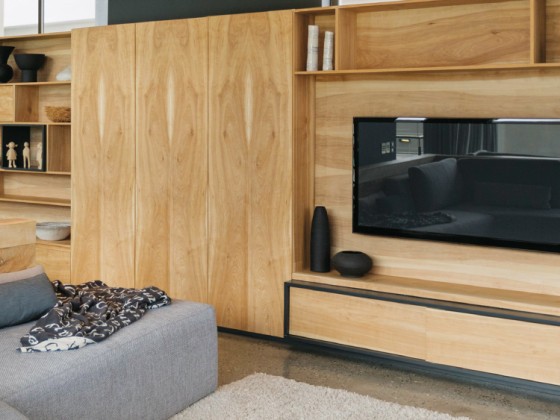
2. Key Advantages of VINNAPAS VAE in Lamination Performance
In panel lamination applications, the VINNAPAS VAE product series demonstrates several targeted advantages. First, in terms of adhesion to PVC film, these VAE emulsions typically exhibit high initial adhesion, quickly forming an effective bond under wet conditions, reducing process risks such as warping and slippage. This characteristic is particularly important for high-speed lamination lines.
| Products | Technical data | Film-to-Wood lamination | |||||
| Solids content | Viscosity, dynamic | Glass transition temperature | Adhesion | Heat Resistance | Setting Behavior | Water Resistance | |
| VINNAPAS 920 | 54.0 - 56.0 % | 800 - 2000 mPa·s | approx. -20 °C | Excellent | Medium | Medium | High |
| VINNAPAS EAF 68 | 58.0 - 61.0 % | 4500 - 9500 mPa·s | approx. -35 °C | High | Medium | High | Medium |
| VINNAPAS EP 3588 | 62.5 - 64.0 % | 200 - 800 mPa·s | 2 - 8 °C | High | Medium | High | High |
| VINNAPAS EP 6300 | 62.0 - 64.0 % | 600 - 1500 mPa·s | approx. 0 °C | Excellent | Medium | High | Medium |
| VINNAPAS EP 6420 | 54.0 - 56.0 % | 3500 - 5500 mPa·s | approx. 2 °C | High | High | High | Medium |
| VINNAPAS EP 645 | 54.0 - 56.0 % | 4000 - 9000 mPa·s | approx. 5 °C | High | Excellent | High | Medium |
| VINNAPAS EP 656 | 54.0 - 56.0 % | 4000 - 9000 mPa·s | approx. 5 °C | - | - | - | - |
| VINNAPAS EP 7000 | 69.5 - 71.5 % | 1200 - 2700 mPa·s | approx. -3 °C | Excellent | Excellent | Excellent | High |
| VINNAPAS EP 701K | 54.0 - 56.0 % | 2000 - 4000 mPa·s | approx. -10 °C | Excellent | Medium | High | High |
| VINNAPAS EP 706 | 54.0 - 56.0 % | 3500 - 4500 mPa·s | approx. 0 °C | High | High | High | Medium |
| VINNAPAS EP 709 | 54.0 - 56.0 % | 2700 - 3700 mPa·s | approx. 7 °C | High | High | High | Medium |
| VINNAPAS EP 710 | > 54.5 % | 4400 - 5400 mPa·s | approx. 0-4 °C | High | High | High | Medium |
| VINNAPAS EP 724 | 54.0 - 56.0 % | 1500 - 2500 mPa·s | approx. 19 °C | High | High | High | Medium |
| VINNAPAS EP 745 | 54.0 - 56.0 % | 4000 - 9000 mPa·s | approx. 5 °C | - | - | - | - |
| VINNAPAS EP 756 | 54.5 - 56.5 % | 600 - 2000 mPa·s | approx. 0-4 °C | High | High | High | Medium |
| VINNAPAS EP 760 | 59.5 - 61.5 % | 2000 - 3000 mPa·s | approx. 0 °C | High | High | High | Medium |
Secondly, heat resistance and durability are crucial performance indicators for laminated panels in actual use. Through reasonable glass transition temperature (Tg) design, VAE emulsions maintain flexibility while ensuring heat resistance, preventing delamination or adhesive failure of laminated panels within a certain temperature range. This is of practical significance for products such as furniture and cabinets used in complex environments.
In terms of substrate adaptability, VINNAPAS VAE exhibits good wetting and penetration capabilities on a variety of polar substrates. Whether applied to MDF, particleboard, or paper and wood veneer surfaces, it forms a stable adhesive film structure, contributing to improved overall strength and appearance consistency after lamination.
Furthermore, fast curing speed is another important characteristic of this type of VAE product. The reasonable film-forming temperature and viscosity range allow it to quickly develop cohesive strength after pressing, shortening subsequent processing or stacking waiting times and increasing production speed. This advantage is particularly prominent in large-scale panel processing scenarios.
3. Typical Panel Lamination Applications and Selection Considerations
At the application level, VINNAPAS VAE is widely used in various panel lamination structures. For example, in the lamination of PVC film and wood substrates, VAE provides reliable bonding strength while maintaining a flexible feel, suitable for products such as cabinet doors and furniture side panels.
In the wet lamination of decorative paper and wood-based panels, the VAE system helps the paper to be fully wetted and adhere to the substrate surface, reducing bubbles and wrinkles and improving the stability of the decorative effect. These applications typically focus more on the rheological properties and open time of the adhesive to ensure a sufficient operating window.
For lamination structures with higher performance requirements, such as HPM, VAE emulsion can be an important component of the system, achieving good heat resistance and interlayer bonding strength through coordination with process parameters. When selecting, it is usually necessary to comprehensively evaluate technical indicators such as solid content, viscosity, and Tg.
In actual use, the VAE product should also be selected specifically based on factors such as production line conditions, pressing temperature and time, and substrate absorbency. By reasonably matching the adhesive performance with process conditions, it is possible to improve overall production efficiency and product consistency while ensuring lamination quality.
Website: www.elephchem.com
Whatsapp: (+)86 13851435272
E-mail: admin@elephchem.com



 IPv6 network supported